Wednesday, 26 March 2014

From covert to overt rebel


I was once described as a covert rebel when it came to my diabetes self-management and the treatment I need from my health care team. I suppose this meant that I would hide a lot of the issues that I had with diabetes, not only from Health Care Professionals (HCPs), but also from myself. Obviously this isn’t something that got me very far… but being secretive was a reaction that evolved from many health related experiences that I didn’t understand or that I didn’t want to go through again.

So today I suppose I’m being a rebel, but an overt rebel.

You know those forms that we’re given to establish our emotional and mental state when it comes to life with diabetes… PAID questionnaires, mood questionnaires… do you have a smiley or a frowny face questionnaires etc. Well I’ve had some of these for a few weeks now, sitting in my lounge collecting dust. Having filled in the exact same forms only 2 months ago and expecting some sort of feedback afterwards, I decided to think things through in more detail than I usually would before completing them...

I suppose they occasionally make a good coaster for my tea, but obviously they have a much more important job. But what is that job? It’s never been explained to me. I know that I’ve been handing in these questionnaires for many years now. I recalled in a blog recently completing one when I was around 18 years old, and I’ve done quite a few since then for different HCPs… but what are they for? What can they do for me? If a questionnaire can evoke tears in a patient, surely they are addressing an issue that needs to be followed up?

I know what they tell me… they tell me if I’m coping or not, if I’m engaged in my health or not, if I’m worried about the future with diabetes or not and many more things. But then what do they do? Once I’ve completed them what happens next? Are they a box ticking exercise? Maybe they go towards a giant pool of data that’s been collected about patients all over the local area… maybe they just go into a filling cabinet – out of sight out of mind? I really have no idea!


What happens to patients after we’ve filled in these thought provoking forms? I can only talk from personal experience but after filling them in I’m left with an open door… one that I’ve kept closed for many years… a door that once is opened is hard to close again when I’ve been asked to address questions such as:

Do you feel scared when you think about living with diabetes?

Do you feel constantly concerned about food and eating?

Do you have feelings of guilt when you go off track with your diabetes management?

So I answer the questions that are placed in front of me, often with test results or blood glucose patterns swimming through my head, with only myself and my HCP in the room, in an environment that isn’t exactly relaxing and with no explanation of why I’m being asked to do this or what will happen next… and I face up to the fact that actually, these questions do force me to reflect on how I’m feeling, managing and coping, but I just hadn’t acknowledged it until that moment. Why hadn’t I acknowledged it? Because I can’t always do that on my own. Quite often that’s a feeling that scares me… and then I leave. I go home on my own and I reflect. It's something that I do without even realising I'm doing it, but I think about my answers... Cue the covert rebel wanting to come back into play.

Then I repeat this routine again when I’m asked to…

However this time I haven’t. I’m waiting for an answer. I’m waiting for an appointment so I can ask “why and what’s going to happen afterwards?”

I understand the importance of collecting data but I also know, as a patient, the importance of assessing, planning, using interventions, and feeding information back to patients… involving them in every aspect of their care. 

If I am going to be addressing issues that life with a long term condition can bring, as and when it is required of me, then I will only do so when there is a plan in place for the repercussions of this exercise. My HCPs may call me difficult for taking this stance, people reading this may not agree that it's the right thing to do, but in order to be engaged in my care (which is what my team wants) I want to be engaged and informed in all aspects. I think that's only fair.

Reading this blog back before hitting the publish button I feel that I already know what the answer will be when I ask my question... but I hope that I'm wrong. As for the support that I may or may not get as a result of these questionnaires... that's a whole other topic to be discussed another time.


Ninjabetic x 


SHARE:

Sunday, 6 October 2013

The 4Ts - After diagnosis


The 4Ts campaign was launched by Diabetes UK in order to make people aware of the signs of undiagnosed Diabetes. Knowing these signs could prevent a person from going into diabetic ketoacidosis, which can be fatal.  

The signs to look out for are; 

  • Thirst
  • Toilet
  • Thinner
  • Tired

You can read more on this campaign here 


However it's important for people to recognise that the symptoms that present at diagnosis don't always end there. 11 years after being diagnosed I still experience these symptoms.

I can only share my personal reasons for why this has happened in the past and occasionally now, and hopefully by sharing them it may give a little insight into how we can help and support others who are displaying the 4Ts.

Here are a few of mine:


Education

A lack of diabetes education can lead to all sorts of difficulties and, for some, complications. Diabetes is a life long learning process and educations needs to start from the very beginning. Structured education is incredibly helpful as the next step from basic education, and it allows us to think of strategies to adapt to our own lives... Being given a leaflet some insulin pens and a blood glucose meter, then being sent on your merry way... Not so helpful. 

Here are a few educational tools that would have made a big difference to my diabetes management:


Carb counting - Is everyone taught how to carb count from the start? Well no, they aren't, but how long is it before people are informed of this amazing self management tool? 

For me... 9 years. 

It wasn't long until I was put on a basal bolus regime, and for 9 years I was told to take exactly the same amount of insulin 4 times a day and to avoid sugary food and drinks - that was all. I didn't use the internet or social media to educate myself about diabetes until 2 years ago; otherwise I'm sure I would have discovered carb counting for myself. I relied on my health professionals to give me the information I needed to control my blood sugars, but from the start it wasn't delivered. 

And then one day I was told about a wonderful educational programme (JIGSAW) that not only taught me how to carb count, but almost everything else I needed to know about my diabetes. As insightful and helpful as this was I couldn't help but feel a little sad and disappointed that I hadn't been offered it sooner. I understand that staff are stretched, money is tight and time is precious... but for 9 years...

Corrective doses - I had no idea that I could take a little more insulin, without food, if my blood sugars were too high. On being told this 2 years ago I was shocked... Can I really take insulin without food? It was like I was being exposed to a whole new world... My blood sugars improved dramatically after this discovery. Combined with being able to carb count, I felt like a whole new person.

Rotate injection sites - Again, I didn't know this until 2 years ago! 9 years of injecting into my legs caused hard lumps and extra fat deposits to develop. These lumps change the way insulin is absorbed, making it more difficult to keep your blood sugars within target. For me this also contributed to high blood sugars, I just didn't know it at the time. 


Needle Phobia

Pre-diagnosis I disliked needles, but post-diagnosis I feared them, to the point that stopped injecting. A phobia is an irrational fear of a particular situation or object and I avoided both in any way I could. 

I was labelled as 'non compliant' even though I had admitted my fear of needles on a number of occasions in appointments. I made no secret of why I didn't get my hba1c done, but never was there a suggestion made to help me around this problem. To this day none of my health professionals have even approached the subject and I was even told by one only a few months ago; "You do not have a fear of needles".

I accepted that I wasn't going to be given help on this one, so I found my own way around it... I studied a psychology module about phobias in patients - I chose to concentrate on needle phobia and from this I found my own self help strategies.


Stress 

This one's a pain in the pancreas. Stress can make a person do some strange things, but it can also make blood sugars do some equally strange things. 

When we're stressed (physically or emotionally) our stress hormones kick and raise our blood sugars in order to help us deal with the situation. However for those of us who have diabetes, bringing those blood sugars down can be tricky. 

Recent prolonged stress has left me with the 4Ts - I couldn't remove the stressor, therefore I was/am tired, thirsty, thinner and going to the toilet more often. Whilst it was happening no matter what I did to try to bring my blood sugars down they would not budge.

Stress can also affect appetites, causing blood sugars to go off target. I lost my appetite for weeks, it came back with a vengeance (comfort eating) and then off it went again. 

On seeing my consultant last week I realised that I should have gone to him much sooner than I did. I tried my best to adjust my regime and combat the high blood sugars, but being unsuccessful only added to the problem. A few comforting words, an understanding wink and a review of my sugars has helped immensely. 


Control and Rebellion

Control - This is a strange one for me - Being in good control of blood sugars, diet, exercise, and overall diabetes management can be incredibly empowering and rewarding. 

However control can also be a form of protection from hurt and pain that may have been experienced - usually it's reinforcing the problem that has caused it, and therefore not protecting us from it. Not testing blood sugars and not injecting can be forms of control in people's lives.

This leads me to...

Rebellion - Not a cry for help as some would think. I was once described as a covert rebel. I would sit and smile sweetly in appointments, but secretly I was thinking of different directions to take, escape routes and ways to cheat my clever health professionals. I didn't want to submit to their authority. In the past I'd only experienced rushed appointments with little or no change in their structure, leaving me with little or no change in myself. I wasn't given any reason to feel wanted... I felt I was simply there as a hospital number.

And today...

Today things are different... I can see the mistakes that I made and the mistakes that were made with regards to my treatment. I can see the different options that are available to me if I open my eyes and ears. I can see that if I want something I have to go out there and get it for myself... but I can also see others who are still struggling to get what they need for many reasons, and as I said before; hopefully by sharing our experiences and showing understanding we can help and support them through those 4Ts.

Please feel free to add any of your own reasons for why you still experience the 4Ts and how you have been helped/helped yourself in overcoming them.

Ninja x


SHARE:

Monday, 2 September 2013

7 day working in the NHS


“We live our lives 24/7 and an illness doesn’t stop for anyone.”


This was said by a patient recently at a conference I attended. The conference was a learning exchange involving patients, carers and health care professionals, looking into 7 day working across the NHS.


To me it seemed like one of the rare opportunities that I wish would happen more often, so I of course jumped at the opportunity at attend as a patient representative. Those who had the power to make 7 day working a reality were sat on my table, listening to not only my experiences, but those who had shared theirs with me the previous evening.  


Back and forth all day, we listened to stories from patients and carers… some incredible stories of the lack of available specialists leading to life threatening situations. A common theme rang throughout the room… patients who need specialist care fear being admitted to hospital on a weekend or an evening. I certainly sympathised with them… nodding in agreement and sharing my recent experiences that have lead me to sharing this same fear. Any hospital should surely provide its service users with reassurance that they will be safely looked after, however it seemed to me that what is happening is that poor care, for whatever reason, is reinforcing fear in its users.


During the conference I was sitting next to an elderly gentleman called Rodney. Rodney suffered from a stroke many years ago, and thankfully on the day it happened he was saved by a specialist. This is what Rodney said to the room;


“I feel lucky that I had a stroke on a week day. Had it been any other time I would not be alive now.”


Once Rodney had recovered from his stroke he made it his mission to have a 7 day stroke service in this local area. He spoke to commissioners, health care professionals, other patients and the media. He took on the battle to ensure that people would be safe should they experience a stroke out of hours and he was successful!


Personally, when it comes to my diabetes care I feel completely looked after and safe when admitted during a week day because my diabetes team are there. Even if the person sent doesn't know me, they still have the knowledge to make a safe decision. However this year I have been admitted on weekends and evenings and I have had no end of problems. My diabetes team are aware of what I went through and how dangerous it was, and I'm happy to see that something is being done about this. I know that it's not through lack of trying by my D team, I know they are as frustrated as I am, but should it come to this? Should a patient with diabetes go into DKA or hypo due to a lack of understanding before action is taken? 

If you'd like to look at this link you can read what other patients with diabetes have experienced.

Other patients at the conference spoke about the trouble they have had when diagnosed with an illness over the weekend. The diagnosis is made, however it isn’t until Monday morning that the appropriate treatment can be given, leaving patients deteriorating or worrying. I myself was told once on a Friday evening that a scan showed a shadow on my brain, but nothing could be done about it until the surgeon was in the hospital on the following Monday morning. Knowing what this could have meant left me distressed and panicked for 2 days before the surgeon could perform a biopsy. An early diagnosis is of course fantastic, but not if the means to treat the illness aren’t available.


What struck me that day was the willing from the health care professionals to do more. To go above and beyond and to admit that mistakes are made, projects fail, lessons are learnt and ideas simply must be shared. I could sense their frustrations when they heard of the patient stories, and although there are some bad apples out there, I was grateful that in that room was a consensus that 7 day care can be done.


Many concerns were shared by both patients and health care professionals regarding a 7 day service:


  • Clarity is needed over the definition of a 7 day service
  • What would 7 day care mean to the public and professionals
  • Will there be standard expectations/minimum standard across the UK and can this be extended and developed over time
  • Is it possible to have a service where standards don’t differentiate between week days and weekends
  • How will the public be educated to use the service - e.g. when to use it and how to use it appropriately
  • Do health care professionals have the will and desire to make this work
  • Will a 7 day service be safe for patients and staff
  • How can a 7 day service be implemented when an overhaul is firstly needed for traditional 5 day services


These questions and concerns have been taken on board and will be put to Sir Bruce Keogh before he writes his next report. Let’s hope that this learning exchange has been enough to make positive steps towards a safer future for you, the service users of the NHS.


Ninjabetic x
SHARE:

Sunday, 28 July 2013

Am I in charge when DKA strikes?


Catching a glimpse of myself in the bathroom mirror last night I stopped and did a double take. I was shocked to see how different I looked. My usually bright and sparkly blue/grey eyes looked dull and heavy, the skin under my eyes was dark and sunken and the rest of my face was pale and washed out. I looked burned out and realised, as if seeing my refection was confirmation, that I was ready, once again, to give up on the day. It was 7pm.

The previous week I had been in hospital for 5 days with DKA (Diabetic Ketoacidosis). It had only been 2 months since my last admission with DKA and it was the last thing I was expecting, because 2 weeks prior to my admission had been a diabetes dream. My blood sugars had barely been out of my target range (5-10 mmol/L) and the heat wave hadn't caused me any issues with hypos at all. I was content, relaxed and finally feeling like everything was falling into place. 

This recent admission was much like my previous one in May (find that story here). I was vomiting constantly and although my sugars weren't particularly high, my ketones were rising. I was admitted to hospital at 9pm; however it wasn't until 12 hours later that I was put on a sliding scale. 


I'd been told in A&E that I would need to manage my insulin pump and adjust my insulin according to my blood sugar levels. This meant making decisions about how much to increase my temporary basal rates by, how long for and how many units of insulin I should take as a corrective dose. This meant making those decisions whilst on the verge of DKA (or maybe even in DKA at that point), whilst absolutely exhausted, whilst scared and confused. This meant that I could have easily given myself too much or too little insulin, which in my state would have been very dangerous as I couldn't focus on how my body felt. I was then moved to the Medical Assessment Unit where I was told to carry on with what I was doing with my pump, but at that point I had no idea what I was doing. I was so tired I couldn't function - I was very much out of my comfort zone as regards managing the pump.

The next morning I was still vomiting and had been all night. One of the nurses from the diabetes team came to see me and alerted my consultant who came in straight away. He ordered a sliding scale to be put up as my ketones were being caused by the fact that I couldn't keep food or fluids down. Within an hour or two my ketones were lowering and the vomiting had stopped. I was so grateful that my consultant had been there as I was becoming so desperate that I considered leaving. I didn't feel safe at all. 

My sliding scale had been taken down before I'd even attempted to eat anything and I'd been told I could go if I was well enough. I was so desperate to leave (for many reasons) that I went when I should have stayed. This resulted in me coming back in the next morning - straight back into the same room with vomiting, high blood sugars and high ketones. This time it took three hours before any fluids or a sliding scale were put up, despite me explaining that they only way to get rid of the ketones was with a sliding scale. I was asked the same questions that I had been two days before. Had I eaten anything that might have caused the vomiting, had I been around children, what are my blood sugars usually like, how do I manage my pump...? I answered, through tears, and repeated myself over and over again. Finally the sliding scale was set up and finally the vomiting stopped. 

I felt that my insulin pump was being used in place of a sliding scale. I felt that I was being relied upon to treat myself when I was in no fit state to do so. I felt that unless my diabetes team were nearby then I would have been better off at home. 

My consultant was away on the day of my second admission but had phoned to say he was worried and asked one of his colleagues to check on me. Another diabetes consultant came in and reassured me that if I needed anything at all then to ask someone to call the diabetes team who would assist me, then a diabetes nurse came in, then another consultant. Each time I felt more relaxed and looked after, I just wish that 24/7 care was in place and they could have been there from the start.

Last night I gave up on the day at around 7pm, which was fine because I could start over today. I just hope that I still have the energy to carry on if I have another admission, because if last week is anything to go by... I'll need it.

Ninja x 
SHARE:

Monday, 6 May 2013

DKA - Crash Bang Wallop


Perhaps I tempted fate 4 weeks ago with my proud celebration of going 2 years without DKA (diabetic ketoacidosis). Maybe I should have prepared better for when it hit again. I just didn't expect it so soon... not when I had everything under control.

 
It all happened so suddenly - One minute I was in bed, listening to friends drunkenly singing along to a guitar downstairs as I drifted off to sleep, the next I was stumbling around getting dressed and launching myself out of my partner’s house, clutching my stomach and telling him not to stop me from leaving.

 
Somehow I made it home and crawled to the bathroom on the ground floor. My mum slept soundly two floors above me and couldn’t hear me vomiting crying or reassuring myself that the sickness would pass. At that stage DKA hadn’t crossed my mind – I thought it was a stomach bug, but as the hours went by the vomiting continued. 5, 10, 15, 20 + times… each time I was feeling more dehydrated, finding it harder to catch my breath and I was becoming weaker.


At 6am I accepted that I couldn’t get through this on my own (even with Iain the pump chugging away). I fell into my mum’s room and she immediately called an ambulance.


The next 24 hours were a blur – I went to A&E and was taken to resus so I could have my own nurse. The intensive care team came to asses me and made plans for another move.


On admission I was leaning towards DKA - Blood sugars were 20.4 ketones were 3.5 and PH levels were 7.33 However IV fluids and insulin were not correcting my levels and after an hour or so this resulted in sugars of 30, ketones of 4.9 and PH levels of 7.21 - I was later told this was because the first response who had initially cannulated me had some difficulty, leading to fluid collecting in the tissue of my hand and arm instead of doing its job sufficiently, causing cellulitis – bring on the Simpson style chubbiness and days of IV antibiotics to correct it. 
 
Cannula number 2 of 6


One of my biggest worries was what to do with Iain the pump. I’d only had it for just over 3 weeks and I didn’t know what to do regarding sickness and temp basal rates (TBR) yet. I’d increased the TBR to 130% the night I became ill (this was a guesstimate) and I’d left it at that rate ever since. No one that was looking after me knew what to do with an insulin pump, but what worried me the most was that I wasn’t given any direction with it at all. Should I leave it on or take it off? No one knew! A sliding scale had been set up with 9 units of insulin an hour and Iain was still pumping away at 130%

 
Dangerous? Yes I’m sure it was but I was barely conscious and couldn’t make the decision for myself. The staff were concerned, I could see that, but I could also see that they weren’t confident in giving me pump advice – it was a treatment that they didn’t come across often.

 
After having 13 litres of IV fluids pumped through me I woke up the next day to sugars of 5.5 and I turned Iain’s TBR down to 50% (again a guess) as my sliding scale was still up. My diabetes team came to see me and advised me to stop the pump. Hurrah for people who knew about pumps!

My arms & hands took a needle battering so the Drs had to cannulate my feet instead!! Ouch!!


The next day I was told that I was out of DKA but I was still acidotic and as I was still vomiting the sliding scale stayed for a further 4 days. I spent the rest of my time on a ward and I was told that I had food poisoning. I was completely exhausted and I felt worse than I ever had done with DKA – not just physically but emotionally. I barely spoke to anyone but was comforted by the fact that Partha (a consultant from my d team) came to see me every day. Although I haven’t been under his care for 2 years now he still came by every morning and checked on me, he sat at the end of my bed when I had my head in my hands and tears in my eyes, he told me that it wasn’t my fault and that I would get better again… It was nice to get that extra mile… that verbal hug.

 
I’m home now and feeling a lot better than I did. I ate solid food for the first time yesterday but I still feel like my tummy has been run over… reversed on and run over again. Iain the pump is happily pumping away and my sugars have settled nicely back into their target of 5-10.

 
My mood is lifting as I’m getting better but I have the worry of DKA’s on my mind now. Call me naive but I thought this would stop… now that I’m looking after myself I thought I’d seen the end of my hospital admissions. I thought about giving up... I felt that I'd let myself down by being sick... let my diabetes team down... I'd become an unplanned admission statistic that they try so hard to combat. Then I realised how much I'd be letting myself and others down if I didn't get back up, dust myself off and try again. There's always something to come back and fight for, even if I couldn't see it at the time.


Ninjabetic x


SHARE:

Thursday, 11 April 2013

Insulin pump trial - Week 1


So a few of you may have heard me mentioning that I started my insulin pump trial. This is a 6 month trial with frequent reviews at my diabetes clinic to ensure that I’m getting the best out of my pump and that I can use it safely.


Before starting I sat down with my consultant and set myself 4 goals to achieve by the end of the trial:

  • Reducing my A1c by 5mmol/mol
  • Maintaining a healthy weight and BMI
  • Reducing blood glucose variability by 20%
  • Reducing hypoglycaemia experience by 30%


I’ve already attended a diabetes educational course (JIGSAW) and intense insulin therapy appointments (for almost a year) to try to improve my control. Now I need to make sure that an insulin pump is going to be effective treatment for me. Once my 6 months is up my pre and post trial data will be sent away to the CCG (people with the money) to assess my need to keep the pump.

Go time!

The night before my start date I ran through all of my biggest pump worries.

These were:

  • Inserting the cannula myself
  • Being able to hide the pump in my clothes
  • Catching the tubing on handles/people/my dog/anything that sticks out
  • Hypos/DKA


After a week of having my pump (named Iain after my consultant) the only issue that I’ve had is with inserting the cannula. However this reminded me of when I first started injecting, when I would spend ages trying to put the needle in. Soon after diagnosis I had no issues, so I really hope that I will get to that stage soon with my pump.


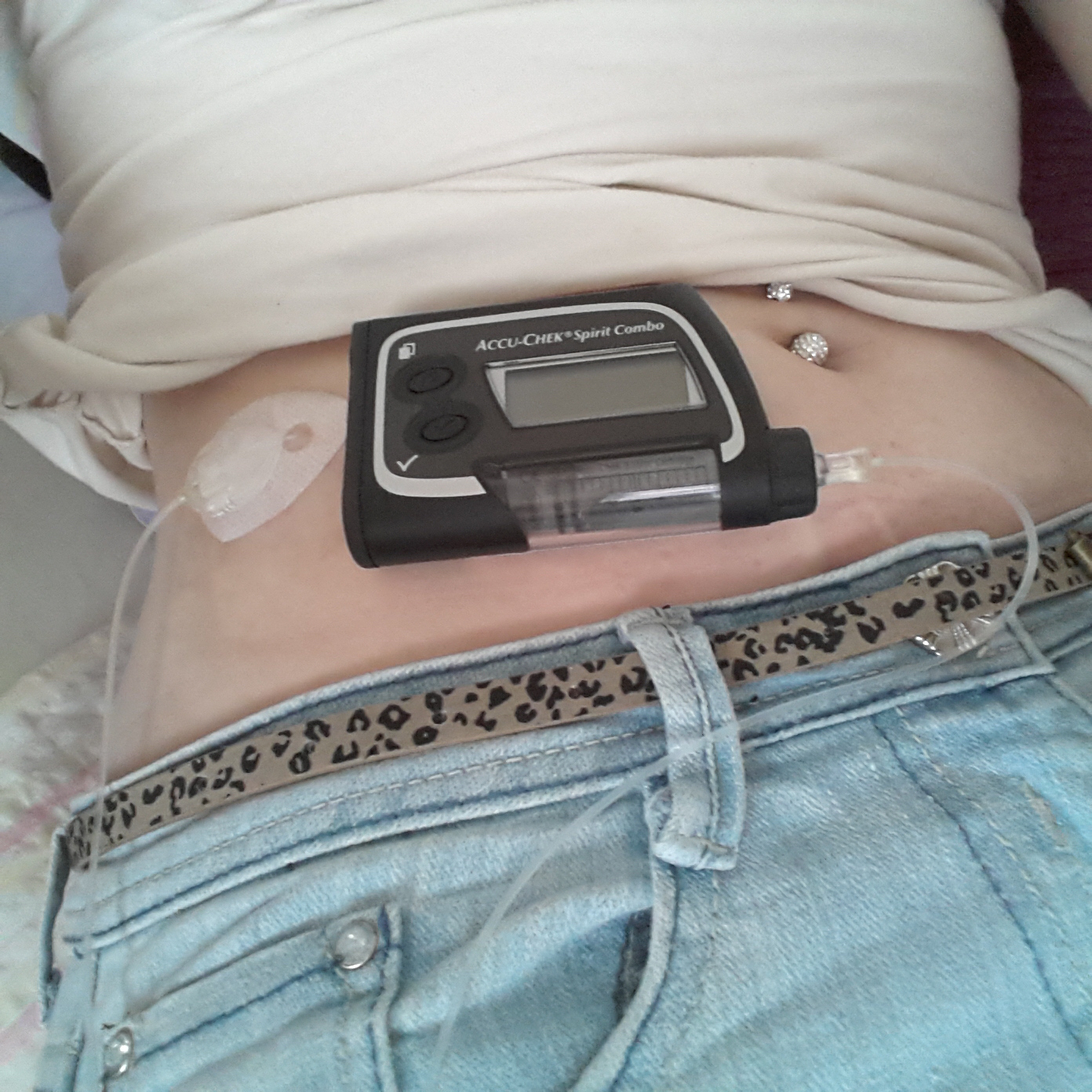
Iain the Pump - Accu-Chek Spirit Combo


After 2 days of pumping I was amazed at my blood sugars readings and how controlled they had become, I fell in love with Iain the pump (and soon regretted calling him Iain). Pre and post meals blood sugars were within my target of 5-10 and although I was having a few lows my rebound highs weren’t anywhere near as bad as they were when I was on MDI (multiple daily injections). I actually look forward to testing my sugars now, whereas before I used to dread seeing my readings because I would feel so disappointed with myself if they were off of target (which was quite often).


Taken today - After 1 week of using the pump


All in all my 1st week of being a pumper has been a big turning point for me. If I’m honest I was starting to despair with my diabetes and it was really upsetting me, to the point that it affected my life far too much. Now I have a lot more hope and have a positive outlook again.


If there’s anyone out there who is thinking about insulin pump therapy then I would definitely recommend you give it a go if it’s possible (I know it’s not always easy to get one). And if it’s not for you, then at least you’ve tried!


Ninjabetic x
SHARE:

Tuesday, 2 April 2013

Pump it up!!


Hi! My name’s Laura and it’s been 2 years since my last DKA!
As strange as this may sound, staying out of A&E for two years is quite an achievement for me! If I turned up now I bet none of the staff would say; “Oh you’re back again!” or recognise my face. Often I felt like a part of the furniture. I even knew how to disable the annoying beep on the sliding scale machines.

Although I’m proud of myself for all I have achieved so far, my blood sugars still aren’t where they should be and this is having a huge knock on effect, physically and emotionally.
Despite numerous changes to my insulin regime, CGM loans, regular and lengthy appointments with my (very patient) consultant and a diabetes educational programme, I’m not getting any further towards good control – In fact my results show that I’m going to opposite way!
I knew diabetes wouldn’t be easy but for months now it has been a time consuming, energy draining, unresponsive  pain in the… pancreas!
My a1c has crept up - My frustrations have also crept up with it (can you tell?)
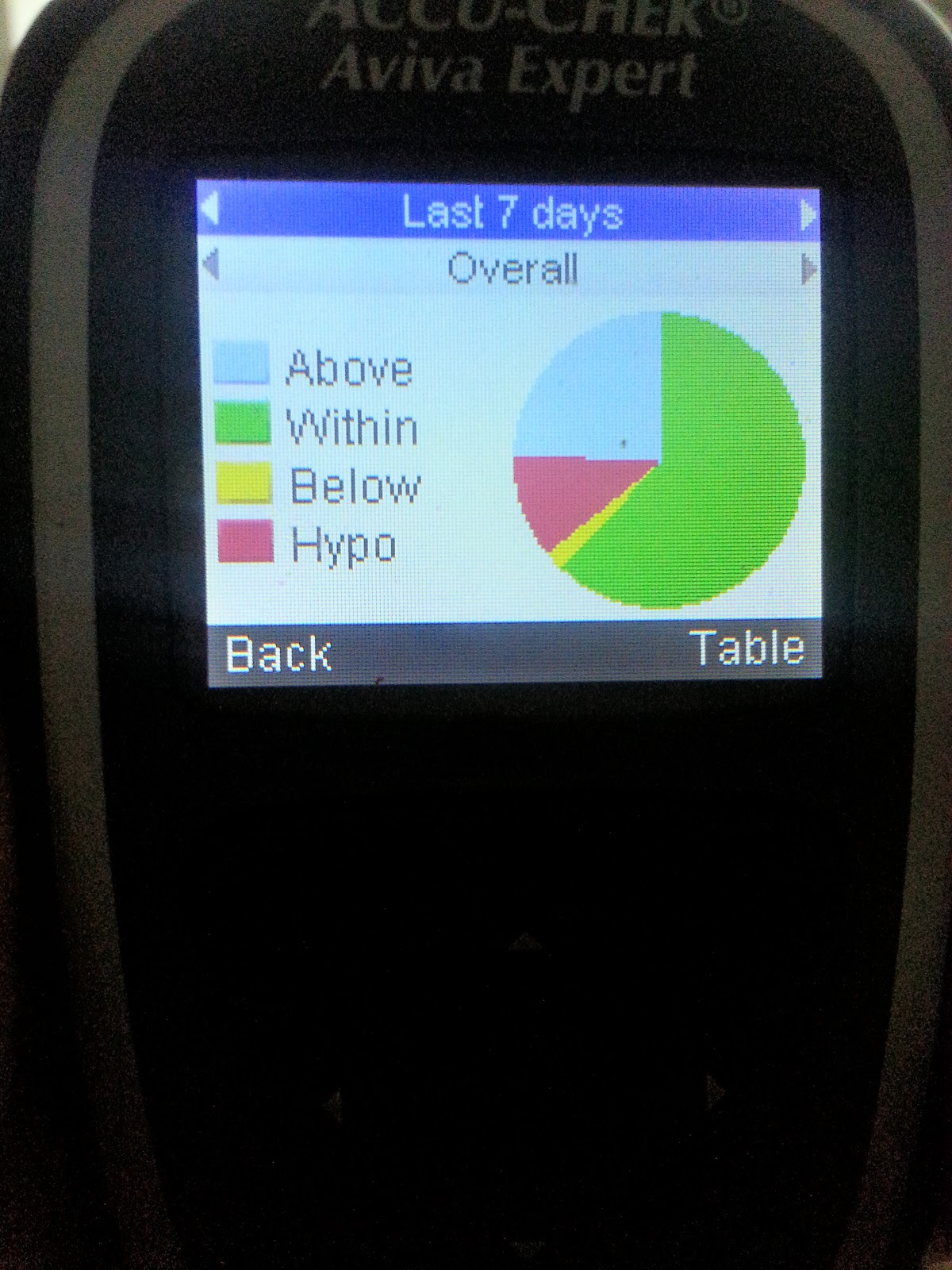
Hypos have become a regular occurrence - In the last 30 days 15% of my blood glucose readings were hypos.  Weight management is distracting and affecting me… even losing a few pounds is an impossible task.
It’s been almost 11 years since my diagnosis and still I regularly wake up feeling like I’ve not slept for weeks. I worry about falling off the diabetes wagon wheel and getting crushed by complications. I still feel faint at the sight of injecting myself… the bruises injections leave on my legs and stomach.
So soon I will start my six month insulin pump trial and hopefully this will be the start of getting me back. I desperately want to feel like me again… I want to be the bouncy, carefree, energetic ninja that I know is inside me! I don’t want to feel that I’m taking one step forward and two steps back anymore… I just want to keep stepping forwards.
Bring on team pump!!!! :)


Ninjabetic x
SHARE:

Saturday, 16 March 2013

The Diabetes UK Professional Conference - Meet the Professionals


This week I attended the Diabetes UK Professional Conference which was held in Manchester. I was invited there as a member of the Diabetes UK Young Leaders Action Group to give a talk about social media and how it has helped me change my diabetes for the better. I was also there as Ninjabetic (a diabetes advocate) and as myself (someone who’s fast approaching 11 years with Type 1 diabetes).
 

I had two intentions while I was at the conference:
 

Firstly I wanted to get across the message that social media has been the most powerful tool in getting me on track with my diabetes.
 

Secondly I wanted to gain an insight into the professional world of diabetes, to hear what happens in meetings, behind closed doors and away from the patients.
 

The latter was very easy to do as no one knew that I was a patient, other than the few who recognised me from twitter pictures. I sat in talks about depression and best practice; I listened to speeches that included research, data analysis, trials and studies… The majority of it was new to me, and the majority of it impressed me.
 

Because so much information is kept away from the patients it was a real eye opener to sit and listen to consultants, nurses and managers talking about the issues that are discussed by patients on social media every day. Being able to listen to health care professionals was an inspiring and captivating experience. It was also very motivating to find that there was the same passion behind their voices as I read in people’s tweets or Facebook comments. There was a lot of willing to think outside the box and to reach outside of the comfort zone. I learnt a great deal from this side of the conference & I feel that other patients would greatly benefit from experiencing similar.
 

When it came to my talk about social media I knew that it would be very different to the talks that had been given throughout the rest of the conference. I started by saying that I didn’t have fancy statistics and charts, that I didn’t have any data or tables to prove that social media has helped me. The only evidence that I had was right there in front of them... it was me.
 

A few minutes before the talk I’d bumped into my old consultant who had looked after me through my nine non-compliant years. As I looked around the crowd I saw him sat quietly in the audience listening to everything that was being said, and it was a comfort to know that he was there to support me and to see how far I’d come.
 

I explained my journey and referred to the destructive years that I’d had prior to taking care of my diabetes. I explained what Ninjabetic was and what the Diabetes Online Community gave to myself and others. I finished by saying that one simple suggestion to start using social media to interact with others could be the turning point for patients. I wanted to emphasise that this free tool could help patients engage with their diabetes and be a huge benefit to their management.


I’d like to think that I was able to reach a few of the people who were sat in the audience, that I may have left an impression on those HCPs that I didn't know. If only one of them suggests the use of social media to a patient then I would know that I’d done a good job that day.

 
I admit that the support I had from the Diabetes Online Community before during and after the talk was overwhelming compared to the response from the audience. If I’d received anywhere near the reaction or support from the audience that I had from the patients and carers on twitter then maybe I wouldn’t have felt so disheartened when the talk was over.


So what did I personally take away from the whole experience? Positives and negatives... as I’d expected.


The same conversations are happening… conversations that excite us and spark debate amongst us! Conversations that could lead to great things for the future of diabetes care. However what stood out the most for me is that both patients and Health Care Professionals are discussing the same topics… they just aren’t coming together to do so in the way that they should be.

 
Communication is key.
 
Ninjabetic
SHARE:

Tuesday, 12 February 2013

My diabetes smile...


Yesterday was a hugely positive and enjoyable day for me. Not because I had a excellent run of blood glucose readings, or because I didn’t bruise myself with a needle. Not because I didn’t have a hypo or need to think about what I was eating. No… It was because for over an hour in my diabetes clinic I saw cheerful faces, heard welcoming and attentive voices, and felt I nothing but enthusiasm and motivation while I was there.


Firstly my dietician came and chatted to me while I was waiting for my appointment. She thanked me for answering a few questions for a diabetes newsletter that is sent out to health care professionals. She’d already thanked me a number of times via email, but the fact that she stopped and took time to chat to me in person (when I’m sure she was very busy) meant a great deal to me.

Secondly I saw other young people in the clinic! Real life young people - not like the ones you see on the front of diabetes leaflets, but people who still had all of their limbs, and were smiling too… always a good sign when you’re in a hospital! Then whilst I was sat in my consultant’s office the DSN who ran my education course (JIGSAW) popped her head round the door to say hi and comment on my hair. The fact that she’d noticed I’d changed my hair made me smile because it showed she was thinking about me… me and not my diabetes, me and not my hospital number, me and not my a1c result.

Next up was my consultant who spent over an hour with me; listening to me talk about my obstacles, concerns, frustrations, achievements etc. An hour is a long time for an appointment, but in the last 1.5 years I’ve never had an appointment that’s been less than an hour long! I thought about what he could have gotten done apart from listening to me rattle on, but he sat and focused on me. He even laughed at my awful jokes!

In that hour he reviewed my blood glucose readings from the past 90 days, set me up with a CGM (as promised) for a week to assess night time hypos, talked to me about the process of getting an insulin pump, talked me through my test results and even discussed a persistent problem (unrelated to diabetes) that I’ve had for 4 years which my GP, sadly, hasn’t been successful in treating.

I’m pleased that my consultant's recognise that 10-15 minutes isn’t long enough for me to get to where I need to be. I know that I won’t always need such long appointments, however I am confident that should I ever need more they will be there for me. 

I left the hospital with another appointment booked for 2 weeks time on a day and time that suited me. Then I thought to myself about how lucky I am to have such a dedicated and supportive team who have the tools to help me with my diabetes management.

I hear stories every day about people who can’t see any member of their diabetes team if they have problems, need to take days off work just for one  appointment, don’t have access to CGMs and won’t be funded for insulin pumps. Unfortunately that list goes on and the people who suffer at the end of the day are the patients. They lose faith in the system and just have to… get by.

This truly makes me appreciate what I’ve got, because I know that come September I won’t be seen at this hospital anymore and I’m already starting to fear that move. I’ve seen that one of my previous consultants from the same hospital has posted a blog that he’s written about Utopian care in the diabetes department. Based on what I saw yesterday and the support I’ve had over the past 1.5 years I can definitely say that from my point of view… the diabetes team at Queen Alexandra hospital, Portsmouth, is doing all they can to win the fight for Utopian care.

I hope that other diabetes teams take notice… and that soon everyone can walk away from an appointment with a smile.
 
Ninjabetic x
SHARE:

Saturday, 26 January 2013

What a difference two years makes....


After Hannah and I were asked to speak at the Diabetes UK Professional Conference in March this year, it really hit home how much has happened in the last 2 years. Looking back I can’t believe where I am today and how I got here.

In January 2011 I’d had diabetes for 9 years. Diagnosed at the age of 16 I didn’t know anyone who had diabetes. I didn’t know what it was, what it meant or how it could affect me. It was a completely new world to me… a world that scared me. I thought it would take away my independence, my friends, my future… and myself.

For nine years I refused anything and everything to do with my diabetes. Injections, blood glucose testing, HbA1c tests, appointments with health care professionals… I pretended I didn’t have diabetes… though I knew it was always lurking in the shadows, waiting to catch up with me.


2 years ago my HbA1c was around 15 and that was the lowest it had ever been.
2 years ago I was in A&E again with DKA (diabetic ketoacidosis).
2 years ago I was diagnosed with stage 4 retinopathy and told I would lose my sight.
2 years ago I’d never met anyone else with diabetes.
2 years ago I regretted every single day that I hadn’t looked after myself and my diabetes.
 
But no more!


Today my HbA1c is 7.8
Today it has been 20 months since my last admission with DKA.
Today my retinopathy has halted in my left eye and is slowing in my right.
Today I’ve met amazing and inspiring people who have diabetes.
Today I still regret every single mistake that I made… but I hope others can learn from them.


“A dead end can never be a one way street; you can always turn around and take another road.”

It’s not easy… if it was then I wouldn’t have ignored it for such a long time. But for me, anything that I do on a daily basis for my diabetes has now become second nature. I barely think when I’m reaching into my bag for my blood glucose meter. I don’t flinch when I see a needle going into my skin anymore. Carb counting has become easier now that apps are available at the touch of a button. Appointments are something that I look forward to, because I get so much out of them. I lap up the information that I’m given by my consultant instead of just smiling and nodding like I used to. I ask questions constantly, I challenge methods of treatment and changes to my regime because I realise now just how precious my health is.

Now that I my health and my life back I want to make every option and opportunity work for me if I feel it’s right.


On top of daily diabetes management I study Monday - Friday, volunteer, work long evening and weekend shifts and involve myself with as many diabetes projects as I can… conferences, events, meetings, more volunteering, research projects, writing etc. Then I look at other people who also do so much on top of their daily diabetes lives and it makes me smile to think of what can be achieved and how diabetes doesn’t hold people back. It’s definitely worth the work and it really does pay off.

This blog is to demonstrate to anyone who is struggling that they can accept their diabetes and find a positive and healthy way to manage it. There is always a way out, there are always people to help and guide us, and there is always a light at the end of the tunnel. If I can do it then I think anyone can!


Hannah's story....


on the 26th November I got an early Christmas present. For a long time me and Laura (aka ninjabetic) had been asking , ok more like annoying, our leader at diabetes uk to be allowed to attend the diabetes uk professional conference in March . on the 26th Alex came back with some even better news - we were being invited to speak at it! So on the 14th march me Alex and Laura will be speaking to hopefully a number of hcp about our work as young leaders and the use of social media. Frankly I’m a little scared about this but it did make me realise how far I’ve come in the past 2 years with some sheer determination, some great friends and a pretty awesome (and very patient) diabetes team.


2 years ago this month I was at rock bottom with my diabetes and self-confidence I was sat in the hospital with my a1c at 10.5 % I was on a very slippery slope with my diabetes. The way I was going I would have had severe complications by my 20s and wouldn’t of made my 40th . I was doing maybe one bloodcount a day, was skipping injections and the injections I was doing I was guessing the dose of. All the locums I’d had previously had written me off as non compliant and didn’t even bother trying to get through to me .I’d had several scary hypos but nothing would get through to me every time my doctor or nurse would try to convince me to do things properly it would go in one ear and straight out the other. Then I got told if I didn’t sort myself out I wouldn’t make my 40th suddenly the reality hit me that I needed to take care of my diabetes

2 years later I’m a young leader for diabetes uk mentoring teens and annoying , sorry advising , doctors on trying to improve care for type 1 whilst studying for my a levels in the hopes of being a children’s nurse. 2 years later I’ve met some of the most amazing friends I could of wished for and been given opportunities I could never of imagined when I was rebelling. i confess I don’t work anywhere near as hard as Laura does on ninjabetic because my blog was never set up to be a support site (I love that teens will come and talk to me though!) it was set up to provide a very unsugarcoated account of what it’s like to live with type 1 as a teenager, the good parts and the bad. 2 years on from my a1c of 10.5 im on an insulin pump testing  seven times a day with an average bg of 7.8 (just after exams it will get better) and with less hypos.

I’ve already been told that my team will be on the front row and also my pump rep.the fight for the insulin pump was something that took nearly 2 years and was so so worth the fight. I went from having to be completely obsessive over my diabetes to actually being able to relax a bit. It’s not perfect I can still have phases where I have 3 or 4 hypos a day or sometimes be hypo for up to 3 hours.  The pump gave me my life back and that may sound like an over exaggeration but it really isn’t for me. Before the pump I was spending every minute trying to control my volatile bloodcounts the pump has let me be a teen again.


4 years ago when I first heard about the professional conference I dreamt that I could speak at it speak about what its really like to be a teenager with type 1. I never thought I’d actually reach that dream , at the time it seemed so unrealistic  but with the help of diabetes uk I am gonna reach that goal. 


SHARE:
© It's me, Laura Marie

This site uses cookies from Google to deliver its services - Click here for information.

Blogger Template Created by pipdig